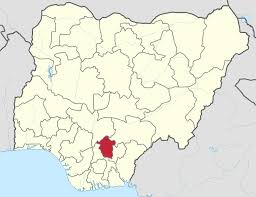
The South-East geopolitical zone has firmly established its commitment to environmental excellence, with Enugu and Ebonyi States achieving the highest national rankings after the overall champion in the 2025 State of the Nigerian Environment Report (STONE 2025). The results, announced by the National Coordinator of Clean-Up Nigeria, Mr. Ene Owoh, in Abuja, placed the two South-East states in the second and third positions nationally, underscoring their dedication to hygiene and waste management.
Enugu State emerged as the cleanliness champion for the entire South-East region, securing an impressive cumulative cleanliness score of 65 per cent. This performance not only makes it the second cleanest state in Nigeria but also reflects a robust approach to environmental policies. Ebonyi State followed closely, achieving a score of 56 per cent and taking the third spot nationwide. These strong showings mean that three states from the South-East region—Enugu, Ebonyi, and Anambra (which was also named among the nine overall cleanest states)—have been officially recognized for their exemplary standards.
The success of the South-East states is attributed to the stringent methodology used by the 15-member National Technical Study Group (NTSG), which conducted the year-long assessment. The evaluation utilized a hybrid scoring system, combining on-the-ground physical verification with advanced satellite imagery that measures spectral data monthly across five key variables: street/road cleanliness, vegetation and drainage control, efficient waste management services, public opinion polls, and the knowledge, attitude, and practice (KAP) of hygiene and sanitation among citizens.
While the South-East states led the nation in regional performance, the highest overall score was achieved by the neighbouring South-South state of Akwa Ibom. Akwa Ibom State secured its status as the cleanest state in Nigeria for the eighth consecutive year, winning the prestigious STONE 2025 Unbroken Green Crystal award and medal of service with an outstanding cumulative score of 79 per cent. The state’s consistent dominance sets a high benchmark for environmental management in Nigeria, serving as a model for other states, including its top-performing counterparts in the South-East.
Despite these notable regional achievements, the national report highlighted severe challenges. The incidence of sanitation-related diseases surged to 43 per cent in 2025, up from 29 per cent the previous year. Furthermore, the report revealed that an estimated 187.2 million Nigerians are living in unclean environments, contributing to a drop in national life expectancy from 50 years to 47 years. Mr. Owoh called on governments at all levels to increase funding for waste management and urged citizens to improve their personal hygiene practices to collectively address these critical public health issues.