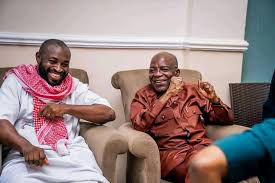
Abia State Governor Alex Otti has announced a reward for Staff Sergeant Amoke Gunshot Simeon of the Nigerian Army for his pivotal role in dismantling one of the state’s most notorious criminal networks. The Governor has pledged that the state government will sponsor overseas medical treatment for the officer, who has been battling complications from a service-related injury.
Staff Sergeant Amoke gained national prominence for leading the 2010 security operation that resulted in the arrest and neutralization of Obioma Nwankwo, popularly known as ‘Osisikankwu.’ Between 2008 and 2010, Nwankwo led a violent kidnapping syndicate that held the commercial city of Aba and its environs captive, paralyzing economic activities and creating a climate of fear.
During a meeting at the Governor’s residence in Nvosi, Isiala Ngwa South, Governor Otti expressed profound gratitude for the soldier’s meritorious service. The Governor emphasized that the state remains committed to honoring those who risked their lives to restore peace during Abia’s “darkest years.”
Recalling the high-stakes operation, Amoke revealed that the kidnap kingpin had attempted to subvert justice by offering him a ₦50 million bribe to abandon the mission. The Staff Sergeant rejected the offer, choosing to uphold his professional integrity. “I was the officer they promised money; they told me to name my price,” Amoke stated. “I said no. My honesty and commitment brought joy to the people of Abia State.”
Despite his success in the South East, Amoke’s health took a turn for the worse following a motor accident while on active duty in the North East. He suffered severe leg injuries that were reportedly mismanaged during initial treatment, leaving him with long-term mobility challenges.
“I am so excited that Governor Otti remembers those who fought for Abia State,” Amoke told reporters. He noted that such recognition serves as a powerful motivator for other military personnel currently serving in the state to remain dedicated to their duties.
The Governor confirmed that the state government would bear the full cost of the specialized medical attention required to restore the officer’s health.